
If you happen to suppose you are uninterested in seeing generative AI in all places, effectively a minimum of your inbox (in all probability) is not stuffed with it (but), which is greater than will be stated for indie developer and writer Finji. CEO Rebekah Saltsman says that the studio’s inbox is crammed stuffed with video games made with AI, pitches written with AI, and resumes generated by AI too and, truthfully, she’s uninterested in it already.
Finji is the studio co-founded by Saltsman and her husband Adam “Atomic” Saltsman of video games like Cannabalt and Overland, who’ve additionally revealed Tunic, Night time within the Woods, the Wilmot video games, and extra. They are a small operation, and really picky concerning the video games they make and publish with their restricted time. Finji has an inbox that is open to pitches from builders trying to work with them, which they undergo commonly, she says—a minimum of as soon as a month however usually as soon as every week.
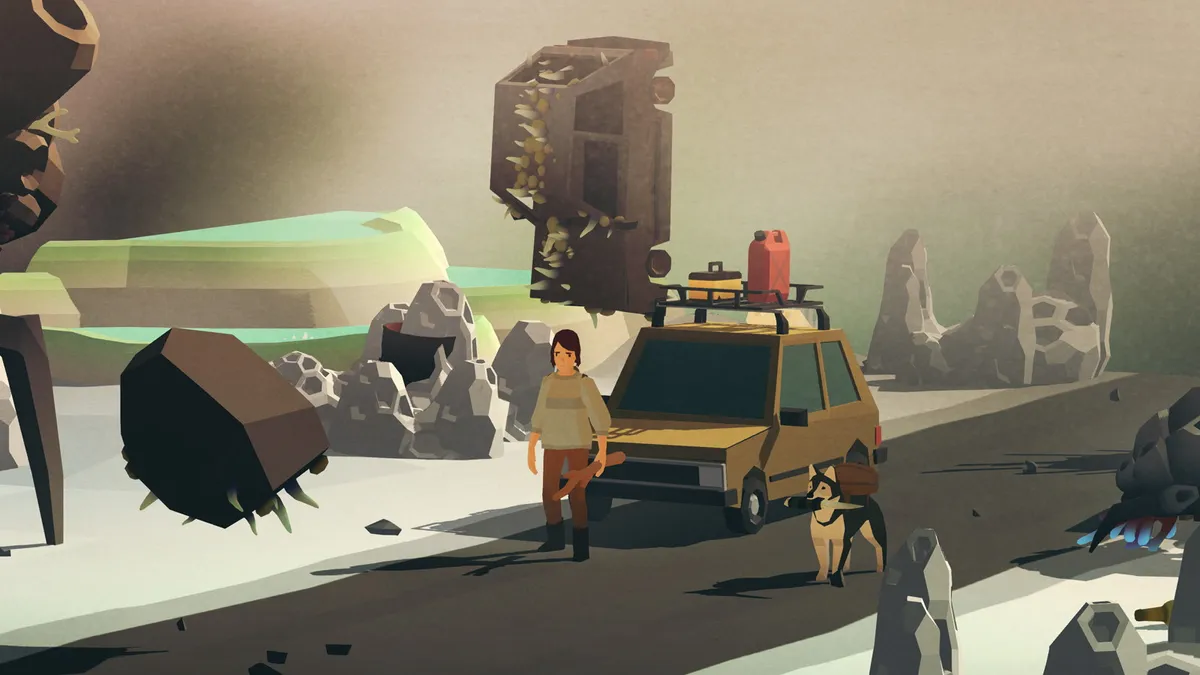
“You wouldn’t consider the variety of AI video games that now we have in our inbox proper now,” Saltsman stated in an interview with PC Gamer, relaying what Adam advised her of his most up-to-date comb by means of the field. “It is far more than I’ve ever seen.”
Article continues beneath
Saltsman thinks some builders are together with AI-generated artwork in pitches as a result of they’re programmers or designers and really feel they want artwork to characterize their work in a pitch to a writer like Finji.
“You would be higher served to only ship containers and programmer artwork to point out the mechanics if you are going to be pitching to someone like us,” she says. “We’re sport designers. It is our job that will help you fill out a group to make this unimaginable. You do not have to be every little thing.”
As a writer, Saltsman’s aversion is sensible. Finji up to date its publishing contracts final 12 months to mirror that Finji can terminate a contract with a developer who it finds is utilizing AI with out disclosing it. “Actually nobody owns any of these things that they are making,” she says. “You may’t copyright it in any respect. You would be sued for theft, relying on what you are utilizing. What a hell of a danger to take there.”

Saltsman’s dislike for AI artwork and AI coding is much like what so many creatives within the business have been saying. Code primarily based on generative AI is just too usually improper. Artwork made with generative AI is boring. “I’m uninterested in seeing it. I am uninterested in having to learn it,” she says.
“We’re simply not going to take part in that market, that know-how, in any approach that goes into our video games. I am fairly sure, particularly at GDC, that that’s an unpopular CEO standpoint. I do not care. I am an indie developer. I make video games. I do not want it.”
Up subsequent on that slate of non-AI video games is Finji’s personal Normal June and the roguelite technique sequel 868-Again that Finji just lately introduced it is going to be publishing.

